What is the National Labor Relations Board (NLRB)?
Updated 11/12/26Updated to clarify terms, impacts to union members, and update links.
Have you heard your union representative talk about the National Labor Relations Board (NLRB) or seen it mentioned on the news, but still wonder what it really is?
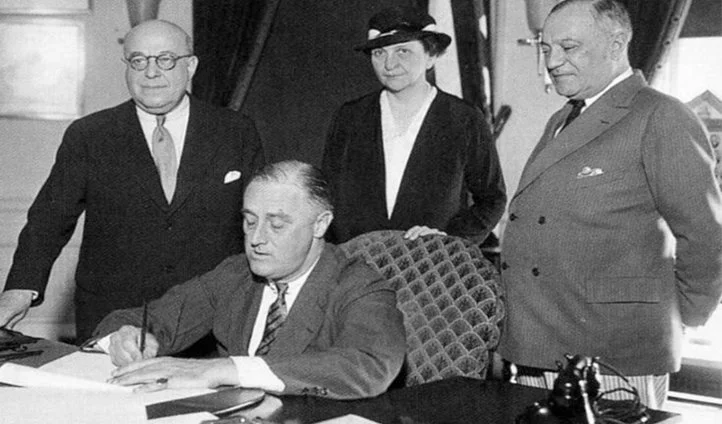
President Roosevelt signing the Wagner Act into law on July 5, 1935 with Labor Secretary Francis Perkins.
The National Labor Relations Act of 1935 created this board to enforce the act and all US Labor Laws in relation to collective bargaining, as well as investigate and remedy unfair labor practice charges. The NLRB members are appointed by the President of the United States and serve 5-year terms.
In practical terms, they oversee representation elections when workers are forming their union and they rule on charges filed by workers, unions, and employers.
If you are reading this there is a good chance you are already a union member, so how does this board impact you?
The make-up of the board, as in, who all is serving on the board and who appointed them to it, has a huge impact on their rulings. Those rulings don’t just impact the workers, unions, and employers who are part of the charge but can impact us all because their rulings are precedent setting. When a new precedent is set that means we all have a new standard to work under. So, you could see long standing workers’ rights change, not because of new laws, but because of who serves on the National Labor Relations Board and what cases come in front of them.
When you hear that board charges have been filed against an employer this is the part of the federal government that handles those cases. It gives our union a method of handling unfair labor practices when a company violates the NLRA.

You can read more about the NLRB on their website at https://www.nlrb.gov/, and reach out to your union representative if you’d like to hear more.